
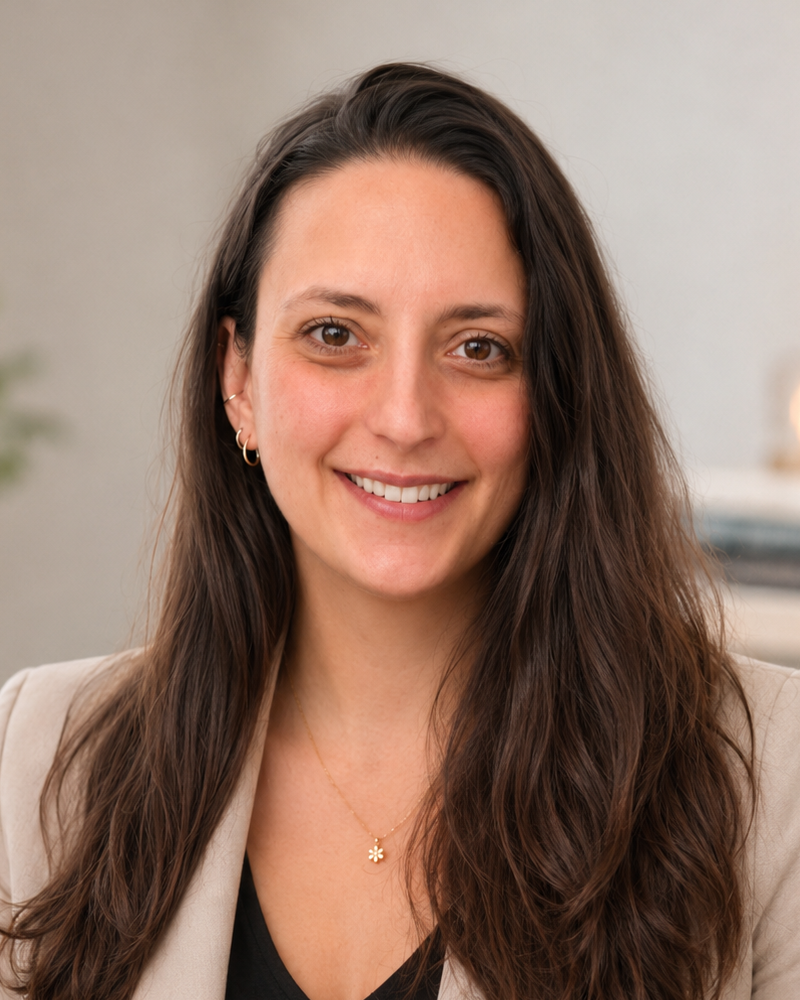
Teaching, statistics, international study, paid media, ADHD, giftedness, and the ambition to build a different kind of education may look like separate chapters. To me, they form one pattern: curiosity about why people and systems perform below what they are capable of, and what changes when the structure finally fits.
I have been teaching since 2012. I was fourteen. Mathematics, statistics and econometrics, first to classmates, then to secondary-school and university students. At Laurentian University in Canada I was a Teaching Assistant in macroeconomics and money and banking, with 100% student satisfaction, and in Italy I have taught in secondary-school classrooms as a substitute mathematics teacher. Across every age and subject the pattern held. Understanding the content is only part of learning; the structure around the learner decides whether it becomes performance.
I studied Economics and Commerce at the University of Udine, graduating with honours as top graduate of my department, and completed an MSc in Economics and Finance at the University of St Andrews. It gave me a foundation in statistics and econometrics, and a lasting interest in what numbers fail to capture when context is ignored.
For seven years, since 2019, I have also worked in marketing and project management. It began in 2019 with student recruitment and national branding for Laurentian University's President's Office in Canada, then leading marketing and dissemination for EU Commission-funded research projects worth €7–15M each (SSHOC, FAIRsFAIR, DICE), coordinating 20+ industry events and growing research communities across Europe. Since 2020 I have worked independently as an account and project manager running paid media, with results such as a 300% increase in inbound quote requests and an 80% reduction in cost-per-click. The work looks different from teaching; the process is not: find the real constraint, separate signal from noise, test a hypothesis, and turn information into a decision someone can use.
I was diagnosed with ADHD as an adult, and later understood my own gifted, twice-exceptional profile more clearly. The diagnosis did not explain everything, but it reorganised the story: the intensity, the boredom, the uneven performance. It also changed how I saw students I had taught. Brightness can compensate for executive-function difficulties for years. ADHD can obscure giftedness. Giftedness can obscure ADHD. A student may look average on paper while working extraordinarily hard to remain average.
While tutoring university students in statistics, many with ADHD, I saw the pattern precisely. They did not need the same explanation repeated more slowly. They needed a different entry point, visible structure, intellectual respect, and strategies that fit how attention and working memory actually behave. That is where this work began: specialised tutoring and an academic research agenda on ADHD, giftedness, and twice-exceptionality.
A nonlinear life is not the same thing as a directionless one.
Moving between countries has made me less attached to the idea that there is one normal way to learn, work, or build a meaningful life.
It has also made me attentive to culture, access, language, and the hidden assumptions built into institutions.
Some people thrive through specialisation and stability. Others do their best work through movement, synthesis, and several forms of contribution. I am interested in building structures that recognise both.
One line of my work asks how to help a mind perform without flattening it. The other asks how to help a business grow without wasting attention and resources. I care about both because both are systems problems, and systems can be redesigned.
Two lines of work, one way of thinking. Take whichever one brought you here.